
What a sad state of affairs it is for this country when a city as iconic as San Francisco, California, can be reduced to the destitute and unlivable state that it’s in today. We’ve all heard the jokes about the fentanyl addicts doing tai-chi on the sidewalks, how the streets are awash with human shit, the stratospheric housing prices in a city that doesn’t offer much in return. Nobody can afford to live here, and why should they? What was once a great American destination is now just another landfill, and it’s all thanks to the libruls.
It’s only because of my love of baseball that I would ever set foot in such a miserable city. The Giants were my little league team, so I’ve stuck through them for many turbulent years of World Series wins and records below .500. Last time I came to see them in the flesh, I was a young idiot who thought I could do San Francisco on the $100 in my pocket and just sleep in my car. Silly me, I spent all my money on parking and had to spend the night in Vallejo instead. That was nearly ten years ago, and the city has only gone downhill since then, so I came this time prepared- I flew rather than drove, brought much more money, and had a trip to South America under my belt so I know what it’s like to travel in the Third World.
BART puked me up at the 16th and Mission station among the rest of the West Coast rejects, and it was everything I feared. The streets were filthy. Garbage was everywhere. The windows that weren’t broken were shackled behind iron bars. Every linear foot of curb space was occupied by bums, twisted into strange contortions and falling fast asleep with pipes in their hands. My God, the rumors were true!
I’ve dealt with nasty neighborhoods before, and the process is always the same. Headphones out, head on a swivel. Wallet in your front pocket, hands by your sides. Walk with purpose. Don’t talk to the animals. If one of them comes towards you with wild eyes and a heart full of evil, give him space, but don’t show fear. Eventually you cross the Market Street underpass, and the city cleans up pretty nicely from there.
Fearful to risk being outside any longer than necessary, I made a beeline down Van Ness Avenue towards my hotel. What a climb! San Francisco is entirely uphill, regardless of street or direction, like a 49 square mile M.C. Escher painting. A proper Republican city would have installed Stairlifts to help people get around, not busses full of hobos or those antiquated streetcar things. Before long I’m forced to look at City Hall, a gold-trimmed relic of the past. Then the Opera Hall- what kind of democrat still watches opera…
Alright, this joke is getting exhausting. Aside from my ten minutes in the Mission District, San Francisco is so goddamn beautiful, and anyone who says otherwise can sit on a pinecone.
In this Newsletter:
- Stomping Around San Francisco
- City of Achievement
- What is a failed city, anyway?
Stomping Around San Francisco
It reminds me of Colombia, with all the hills and colorful buildings and the fog, which is funny because I told my buddy down there that Medellin looks like San Francisco but cleaner. “Mas limpio?” he asked with amazed pride. “Incredible!”
I admit I hadn’t been to SF in about ten years, and barely saw the city when I did. I told Fernando that tidbit based on rumors and videos and the famous and completely inaccurate Poop Map. Now I’ve been there, and I can tell you that I lied to that poor man. San Francisco rules.

Look no further than Fisherman’s Wharf to see just how failed San Francisco is. A tourist trap of that magnitude doesn’t function in a failed city- compare that to Jack London Square on the other side of the Bay, where all the shops are FOR RENT and the only intelligent life is the tumbleweeds blowing by. Fisherman’s Wharf is practically a mall, chock full of designer clothing shops, gift shops, IT’SUGAR, gimmicky stuff like a rubber duck store, and every one of these places was completely full. Plus, the cable cars wisely deliver tourists right to the Wharf where they can unload their wallets with convenient glee, and this is all before you even set foot on Pier 39.
I spent an afternoon there, and the Pier was assholes-to-elbows with families having a Sunday out. Street performances, music, and photo ops with the seals were all as crowded as you could possibly guess. I found a beer garden where I sampled a couple local crafts and watched one of the sea lions try to break into somebody’s yacht, then had a delicious seafood dinner which was surprisingly affordable.
The Wharf isn’t just cash sinkholes, either. There’s a public beach where people were playing guitars, canoeing, and swimming. There’s a whole Maritime National Historic Park where you can tour submarines, a destroyer that survived D-Day, old sailboats, and all the history of San Francisco as a shipbuilding hub during the 20th century. Tons of things to do within a single square mile, and all of them busy.
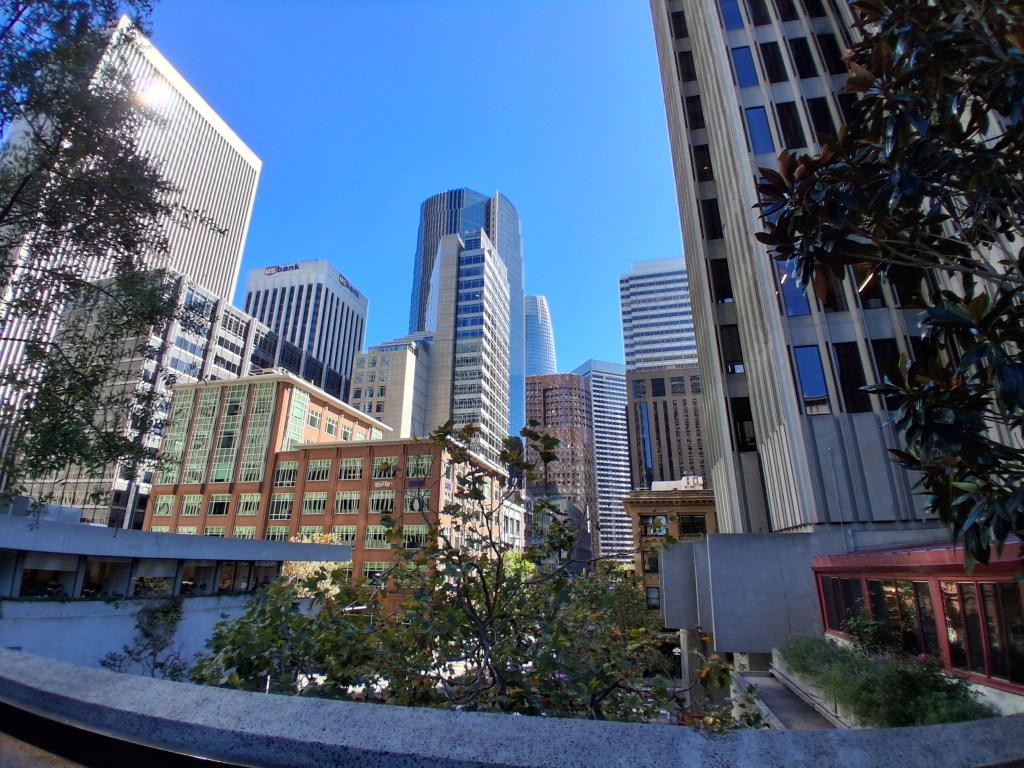
Compare that to Downtown SF, where if you don’t work in one of those high-rises, you’ll be bored to death in minutes flat. Downtown is all business, so much so that even the food carts close up after 3 pm. The skyscrapers are cool to look at, but there is nothing to do. I couldn’t even get a happy hour beer in the area, until I finally found a bar that doesn’t open on weekends. Downtown is for the employed, not for vacation, and suddenly it dawned on me that maybe there’s a reason San Francisco is the wealthiest city in America.
The wealth shows, by the way, and in some of the funniest and most over-the-top ways you can imagine. For instance, I saw a salad and cocktail bar. What bourgeoise combo. You can smell the disposable income on someone who goes in there. I saw houses with gold trimming on the windows. Maybe most glaring display of San Franciscan wealth is those WAYMO self driving taxis, with all their sensors and flashing lights, following the road laws to the letter in a way that I’m sure drives California drivers absolutely nuts.
I talked to one of the cable car drivers about those, and he had nothing good to say about them. For starters, they’re the same price as a taxi or an Uber and it’s putting all of those guys out of business. Second, WAYMO is the second self-driving taxi business in the city. The first one went under after one of their robots murdered and old woman. The story goes that she tripped in the crosswalk. The car assumed that she vanished into thin air, went ahead, and crushed her in the pavement. Lawsuits ensued and the business folded.
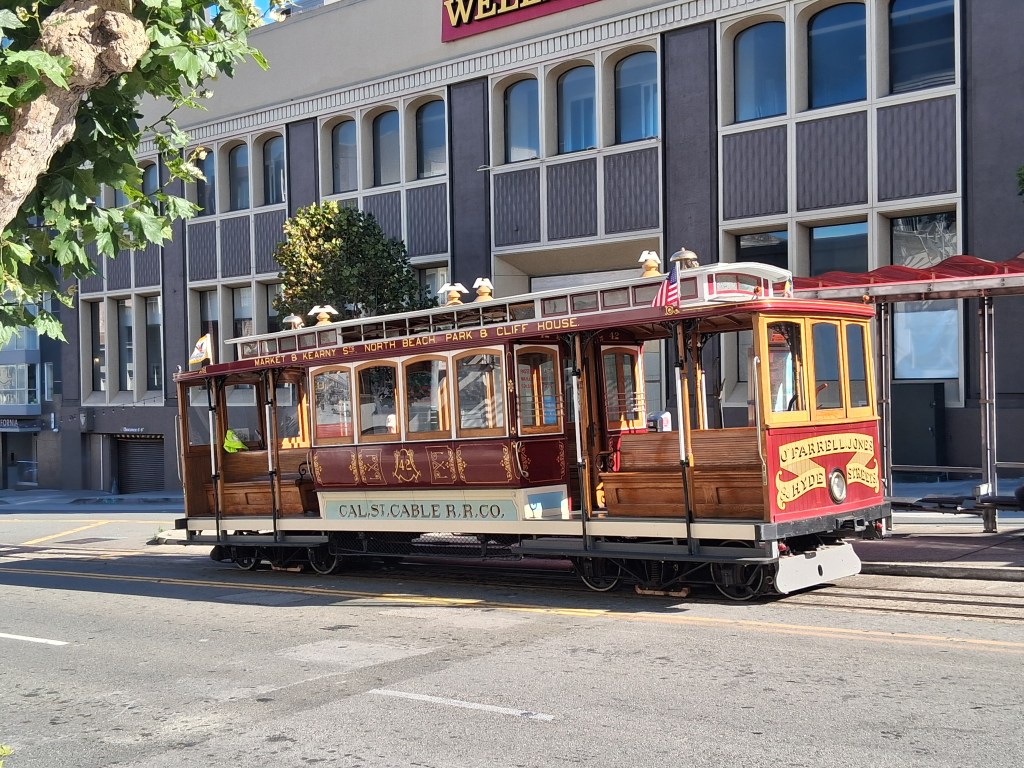
WAYMOs, the cable car operator also told me, have a hard time with the cable cars, because they stop in the middle of the intersection to let people on and off. This violation of traffic laws short circuits the cars’ little Johnny 5 brains and they just, stop. Then they hold up traffic while Headquarters reboots them remotely. Apparently this is a daily occurrence, but people still ride in them, because we can afford it, by God!
As futuristic and neat-o as a city with self-driving taxis is, San Francisco does a great job of holding onto the historic things that gave the city its identity. I went out to the North Beach one night to check out the City Lights bookstore, where all the famous beatniks used to hang out. That was a lot of fun. I scooped up a few titles from McCarthy and Kerouac, then headed next door to a bar called Vesuvio, where all those same beatniks used to get drunk and slam heroin. I got about a third of the way through On the Road over a couple of Jim Beams, because I know Jack wouldn’t have had it any other way.
Bars like this are indispensable for tourists. I talked books with a cute Asian chick for a while, but she scurried off to her boyfriend before I could mention how lonely my hotel was. Immediately I made the acquaintance of a very husky Polynesian guy who was there to watch the Giants:
“Hey Boise, have you been out to the Presidio, yet?” he asked.
“No, what’s that?”
“It’s the park around the Golden Gate Bridge,” he said.
“Cool, I’m going there tomorrow.”
“Make sure you check out the Yoda fountain,” he advised. “You can find it on Google Maps, but it’s not really a tourist thing. You’ll have to keep an eye out for it.”
“Noted,” I said. “Hey, you know where I can get a burger around here?”
“A burger?” he laughed. “You’re in San Francisco. Get a pizza. There’s a place called Golden Boy right around the corner. You order at the window and eat on the sidewalk. Get the Clam and Garlic.”
So I got the Clam and Garlic pizza from Golden Boy and I ate it on the sidewalk. It was delicious.
City of Achievement
“Park” is one of those words that has a whole bunch of meanings, and the Presidio isn’t quite the “park” I had in mind. It’s enormous, and exploring the area was no “walk in the park” but a full six hour hike.
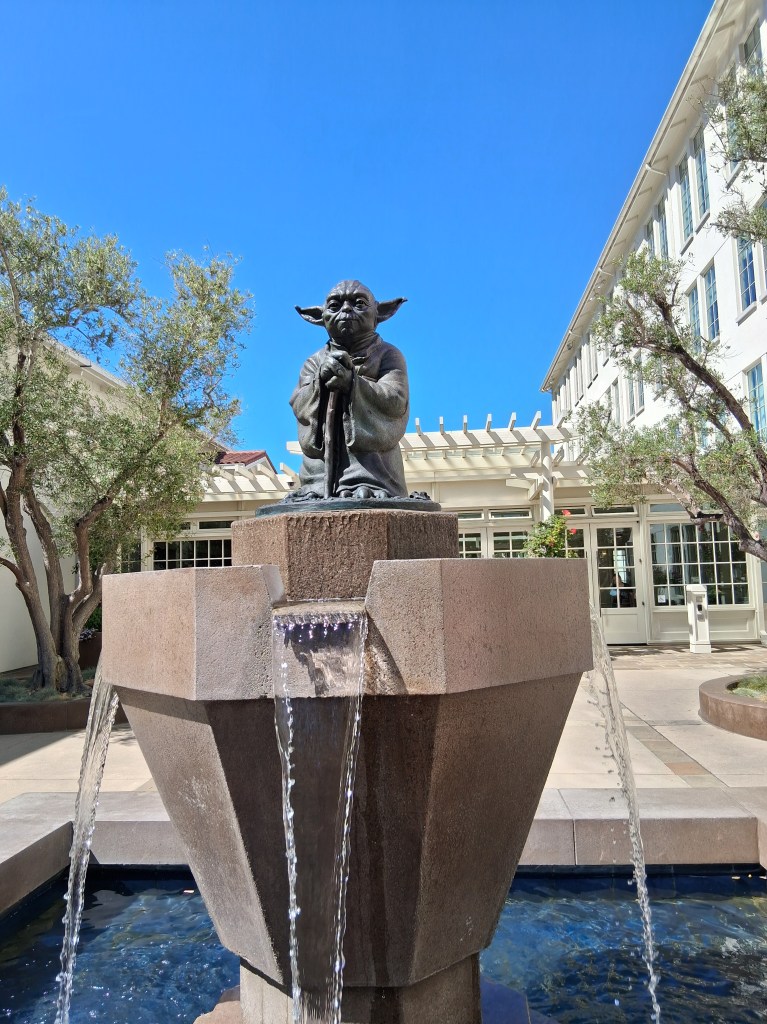
I found Yoda not in a grove of trees surrounded by hippies beating drums, but in an office park surrounded by young professionals trying to get work done. He’s guarding the door of the actual Lucasfilm headquarters, and there are plenty more Star Wars trinkets and statues in the lobby. I went in to snap some pictures, but this isn’t a museum, and the door man will take notice if you linger too long.
This Lucasfilm office was built in 2005, so it’s responsible for every cog in the Star Wars machine that the company has produced since Revenge of the Sith. Now, Star Wars has been hot garbage since Revenge of the Sith, but it is kind of awe-inspiring to take a look at the same lobby that all the people who’ve put blood sweat and tears into the franchise. It’s full of memorabilia, pictures of the team, posters, full-size statues; all of which are reminders of how big and important Star Wars has been in the movie world. I found that to be extremely cool.
Another part of the Presidio that I spent a lot of time at was the Palace of Fine Arts. This incredible building was built in 1915 as part of an international celebration of the completion of the Panama Canal. It was a World’s Fair of sorts where they built a whole bunch of cool buildings just to be torn down after the function, but the Palace remains, and is truly an incredible thing to walk through.
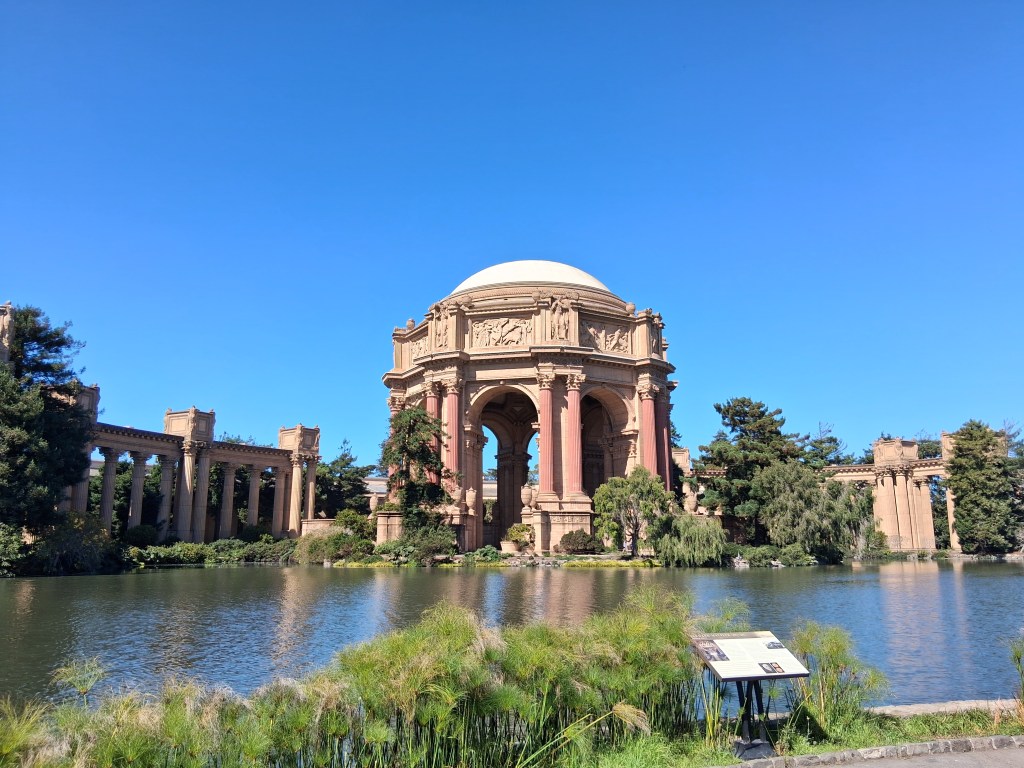
The architect designed it to resemble Roman ruins being overtaken by nature. There’s a lagoon with a bunch of wildlife and birds in the trees. The main rotunda looks completely different at every angle. It’s a beautiful monument to one of the greatest industrial feats Man has ever achieved, crowded out by the beauty of trees and water as a reminder that Mother Nature always reclaims what we’ve built given time.
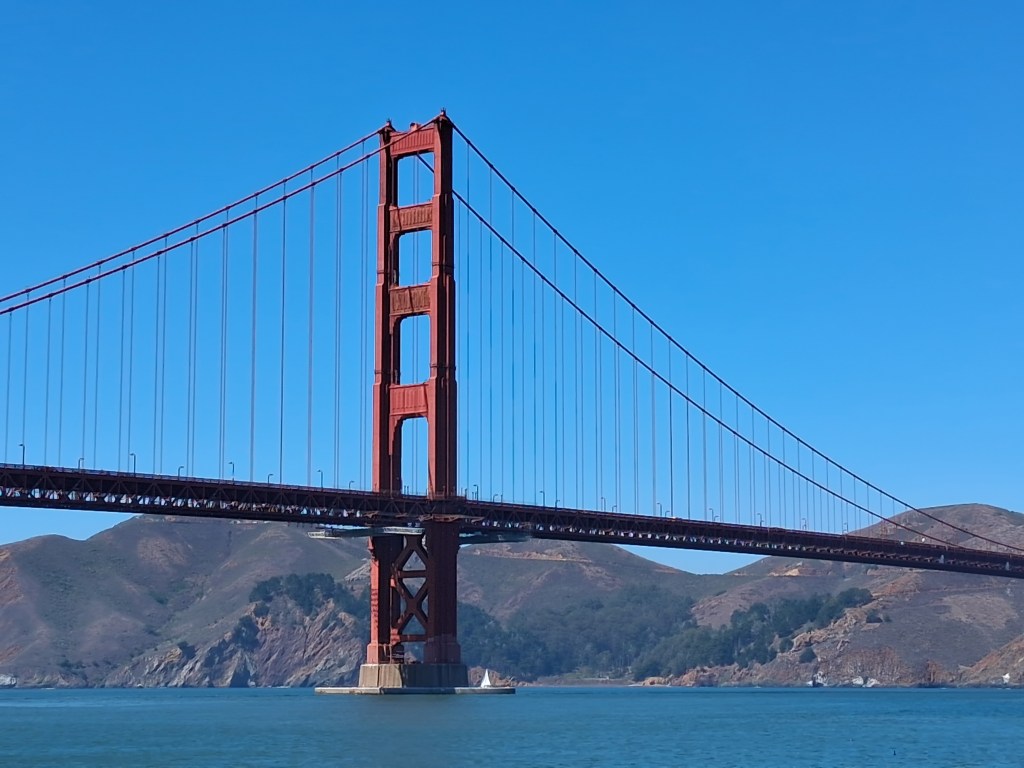
The Golden Gate Bridge was the center of my trip to the Presidio, and was mind-numbingly cool. This thing is so big that you’ll get a great view of it from a distance, walk for an hour to the next view, and it’s the same size. It was almost like an architectural pilgrimage to get to Fort Point, hike up the winding staircases, then get onto the bridge itself to finally see those towers up close. They’re massive, and the creators took their time to make sure they were beautiful as well. What a cool piece of engineering.
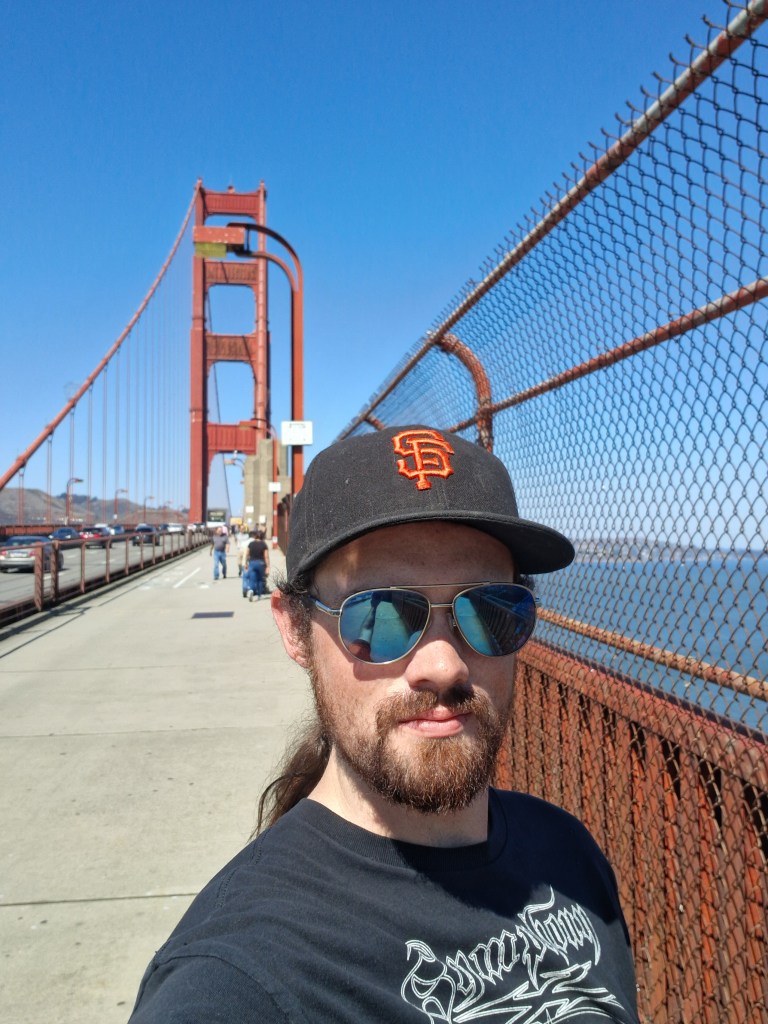
I hadn’t realized that the Bridge is less than a century old. I’ve been living in a stuck culture all my life, so things like that are always framed in my mind as relics of the ancient world, but no- the bridge was finished against staggering odds in 1937. Even in the 1930s nobody thought that the Golden Gate Straight could be bridged. The difficult nature of the Straight required tremendous creativity and bold planning. The Towers aren’t 726 feet above the water just to look cool, they had to be that tall in order to hold the cable. The cables aren’t a yard across just to show off- they had to be. The orange paint wasn’t just for show either, that color makes the bridge visible to passing ships in the fog. All of these things were the creative necessities it took to put a bridge across the Straight, but the inspiring art deco design on the towers was to show off. They made it big because it had to be big, and then they made it cool to add some bold flavor to the bridge nobody thought could be built.
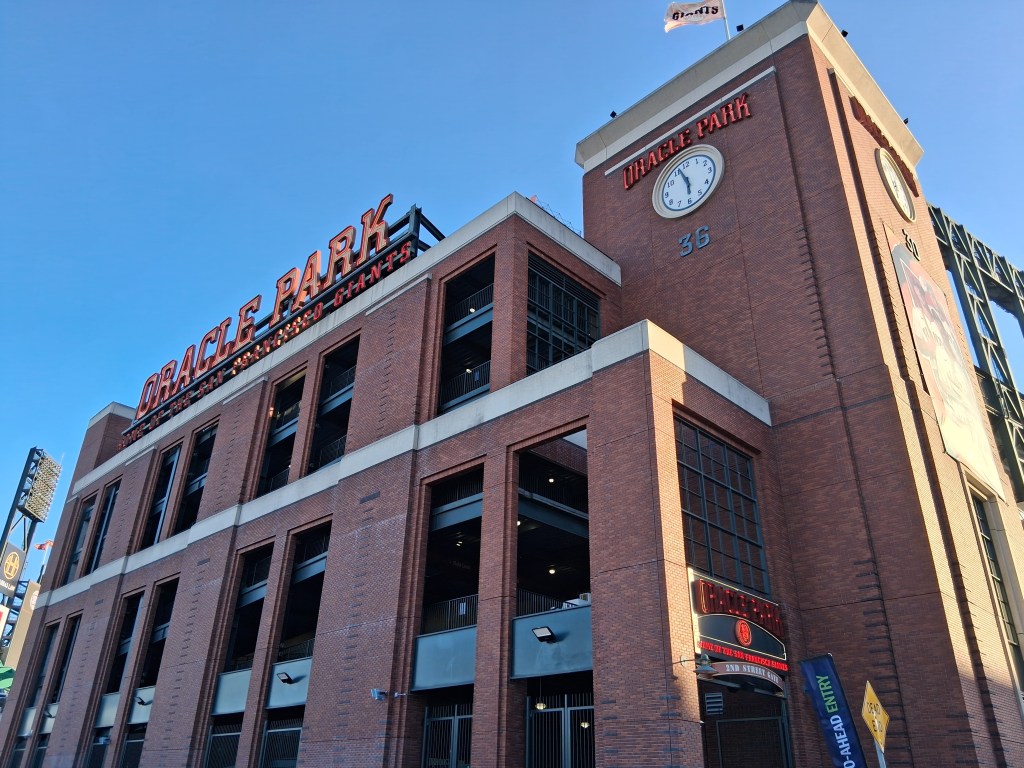
I ended the day with a baseball game. Oracle Park stands out across the whole league. The brick facade gives the entrance an orange hue that reflects the great bridge across town. The plaza with all the palm trees is warm and inviting. Plaques of the game’s greatest Giants invite you through history of the greatest sport, remembering achievers like Willy Mays, Barry Bonds and Hunter Pence. Three World Series trophies are on display on the main concourse. I saw the giant Coke bottle up close, and found out it’s actually a slide for the playground. I sat by the Marina, a unique part of San Francisco’s baseball culture, where plenty of kayakers posted up on the water drinking wine and waiting for their chance at a right-field foul.
The Giants lost in the way they usually do, by leading most of the game and giving up a slew of runs all at once at the end. This was the game that squashed Giants fans’ hopes of a 2025 playoff run, too. We all sadly shuffled out of the stadium, and I happened to make a couple of friends along the way. Half drunk, we hopped on some Lyft bikes and made our way to Chinatown for karaoke and beer. Bros will be bros, no matter what city you’re in.
One of them does software whatever for a living, recently got married, and is training for an Ironman competition. The other was a marketing/sales guy who’s done big-office work across the US and Mexico, speaks Spanish. The last one dipped early and I wasn’t able to get his story, but hanging out with those guys I’m guessing he’s not a photographer living on his girlfriend’s couch.
More than 37,000 people attended that baseball game. Out of that sample size, the three dudes I happened to tag along with weren’t bums, or losers, or broke but making good money and doing cool things. Is that luck, or is the whole city just that good at achieving things?
What Is a Failed City, Anyway?
Aesop’s fable of the sour grapes: a fox is moseying along and comes across a vine covering in the juiciest, most appetizing grapes he’s ever seen. He wants them. He gets a running start and jumps- and misses. He tries a few more times but can’t quite reach them. So he gives up, walks away, and says, “those grapes are probably sour anyway.”
Everyone who’s ever done anything has experienced Sour Grapes people. Even something as simple as going to the bar to meet girls- one guy can go talk to ten girls and get nowhere, then his buddy who didn’t even try says “yeah, it’s not worth it.” You can start a business and fail. Someone will always say “yeah, that’s why don’t bother.” Even if you’ve “made it,” and done something incredible, the Sour Grapes people always look at what you’ve sacrificed along the way and focus on that, coming to the conclusion yet again that it “just isn’t worth it.”
This thinking scales. Most of America falls into the “red” state category, i.e. conservative, i.e. tradition-oriented. These are the places that haven’t had the cultural impact on the world that “blue” cities (i.e. liberal, i.e. progress-oriented) have had, so it’s easy to ignore ongoing achievement and focus on the bad things that these cities have: high crime, drug problems, homelessness, high rent. From there it’s pretty easy to deem such places “unlivable.” From there it’s a simple step in logic to look at achievements of the past and say “It used to be great, but those liberal policies ruined it! San Francisco has failed!”
You can go to San Francisco and see that it’s anything but. People are still getting work done. People are still doing cool things. They pay through the nose for housing, but that’s because they can afford to. Easy to scoff when you can’t.
I’d even argue that there is an element of conservatism in the way they preserve their past accomplishments. The city loses tens of millions of dollars preserving the cable cars because it’s iconic. There is a team of people constantly repainting the Golden Gate Bridge. They maintain the past because it’s inspiring. Then they do new things because they’re inspired.
San Francisco is a highly effective, very cool, and very inspiring city. However, it has the same downside as every other American city. Winners win, but the losers lose hard. You end up with pockets of violent criminals and drug addicts. That’s all the wise-ass in Nebraska chooses to see when he votes Republican so that they don’t end up like San Francisco. ■


 Spud media