
Sheesh, I thought a month would be enough time to get four piddly country previews done. At least this one will be done before I actually see Argentina. I’m publishing it right now in the Starbucks at the Ezeiza International Airport from Buenos Aires. Not that I’m on a deadline or anything- but the deadline of a preview would be before you view it…
HISTORY
Argentina was Spain’s prize in the Americas. The Viceroyalty of Rio de la Plata encompassed the southern cone of South America, meaning Chile, Uruguay, Paraguay, a little bit of Bolivia, and a little bit of Brazil. Argentina was calling the shots from the capital of Buenos Aires. The region is loaded with precious minerals and carpeted with perfect grazing land. It’s naturally protected by the Andes mountains in the west and Rio de la Plata in the east. It’s strategic, it’s rich in resources, and it’s just beautiful, dammit.
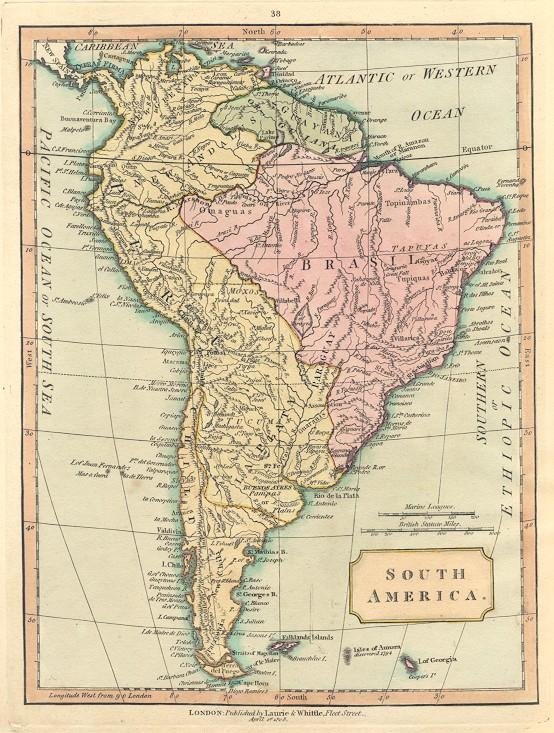
England had just lost their #1 colony. Shot heard round the world, Washington crossing the Delaware, you know the story. They were sore about that and wanted Spain’s favorite viceroyalty, so they sent the navy to capture the Rio de la Plata. The first of those attacks was a direct assault on Buenos Aires in 1806. They captured the city but were forced out after only 46 days. A year later, they tried again, this time capturing Montevideo in full. When they made a second attempt on Buenos Aires, they got stomped again. Half of the army was slaughtered, so the Brits backed off and left the Rio de la Plata region completely.
The Spanish, who were supposedly the overlords of this land, were completely uninvolved with the affair. This made Argentina start to wonder if they could handle things on their own. Besides, Spain had just been taken over by France, and the viceroy was loyal to a king who wasn’t in power anymore. This led directly to the May Revolution in 1810, in which the first military tribunal called a junta was formed and Viceroy Cisneros was removed from power.
The junta claimed to be loyal to Spain, but the northern territories of the viceroyalty weren’t fooled. The “mask of Ferdinand,” as it was called, was an obvious diplomatic game to avoid European conflict while the junta planned a total separation from Spain. Parts of the country, still loyal to Spain, broke off and became Paraguay and Bolivia. The Junta declared war on royalists everywhere, and the War of Independence had begun.
Oddly enough, an important part of this war happened in the Philippines. An Argentine general named Juan Fermin de San Martin was over there kicking up dirt in that Spanish controlled territory, and in doing so, made friends with King Kamehameha of Hawaii. As such, Hawaii became the first nation to recognize Argentina as an independent state, which fueled the fire for independence in places like Uruguay and Chile.
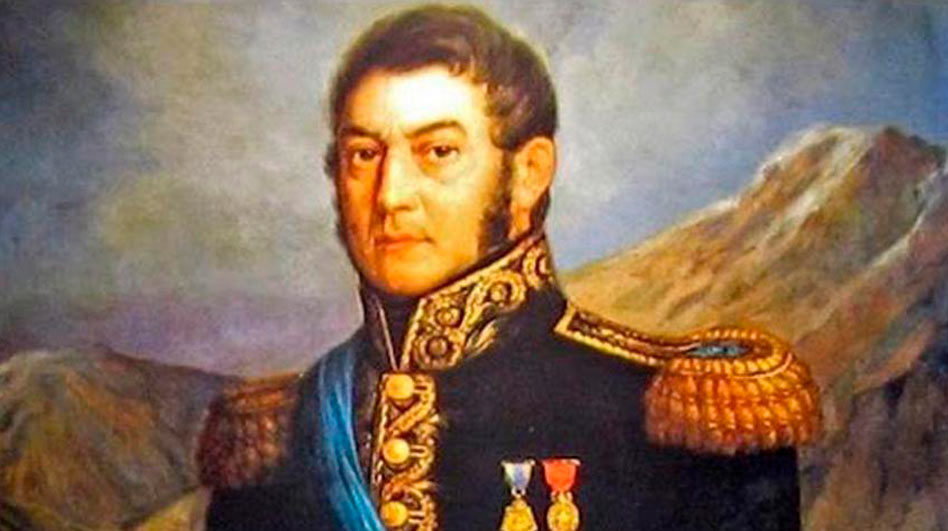
Juan’s brother Jose, meanwhile, was coming home from Spain. He’d been studying military stuff in Malaga when Napoleon invaded, and after fighting the French in that Peninsular War, Jose gathered support and resources from the no-longer-enemy British and sailed home. He formed the Army of the Andes, marched across the mountains, and liberated Chile from Spanish rule. He then marched north and liberated Peru, something his contemporary rebel Simon Bolivar had failed to do.
The Spanish were all but gone from the South American continent at that point, and in Lima, San Martin and Bolivar had a secret meeting. The result was Bolivar’s Gran Colombia taking Peru, which wound up not working out for him very well. Juan de San Martin, meanwhile, relinquished command of his army, retired from politics, and moved to France. Whatever went down in that meeting remains a mystery to this day, but Juan de San Martin is still a national hero across the southern cone. His name strikes pride and fear into the hearts of Argentines, and the Order of the Liberator Juan de San Martin is the highest honor awarded by the Argentine government.
True to South American fashion, as soon as the country was independent, Argentine revolutionaries turned their guns on each other. They split into Centralists and Federalists; the former wanted the new country to be a monarchy, and the latter wanted to use the French republic style made famous by the United States. They couldn’t decide while they still had a war to fight, so Gervasio Posadas was installed as Supreme Dictator in the meantime, in 1812.
Argentina finally formalized their Declaration of Independence on July 9th, 1816. With it, a republic was established, and with it, a civil war began. Federalists wanted an end to the Supreme Dictatorship, and after a bloody Battle of Cepeda in 1820, they got it. A new Centralist constitution was drafted and a new President was elected. The Civil War was over-
-until the Federalists ousted the president and threw the constitution out, and it all started again. It wasn’t until 1831 that the Federalists finally won the war and formed the Argentine Confederation. This was led by President Juan Manuel de Rosas, who struggled to maintain diplomatic relations with the French and imposed some restrictive trade policies that made the interior provinces of the country very angry. De Rosas was eventually ousted in 1853, and the new president Justo Jose de Urquiza made another constitution.
VIPERHAWK: WITNESS PROTECTION
A hilarious sci-fi adventure! Miguel Murillo is a smuggler for the Irish mob, and if these witnesses don’t get to a distant planet on time then there will be war…
This constitution was very promising with its liberal, free-market orientation, but Buenos Aires wasn’t having it. The capital city liked de Rosas, so they seceded. After a second bloody Battle of Cepeda in 1859, the country came together as one once more. Bartolome Mitre was elected president in 1861, and this was the beginning of modern Argentina as we know it.
Mitre did a good job, and was the first President to peacefully turn over power to the next guy. Then him to the next guy. It was the first three Presidents that really laid the groundwork for the modern nation, embracing liberal freedom and free-market politics, with a huge influx of European immigration. Argentina quickly became a trade and cultural juggernaut. Their exports of precious minerals, agriculture and culture made Argentina a major player on the global stage, by 1908, they were the 7th wealthiest country in the world. They would beat Spain’s economy, their former colonizers, until the 1970s.
During this time, there was a massive military campaign called the Conquest of the Desert, wherein Argentine tripled its controlled territory by taking over Patagonia and the southern reaches of planet Earth, even claiming a chunk of Antarctica and a set of islands that shall not be named. They started industrializing in the 1910s and 20s, and it looked like Argentina was going to be one of the most important countries in the world for the century to come.
Then they screwed it all up. I already wrote about that. You can read it HERE.
Get Spud Content Delivered Right Up Your Butt
Join the email list for updates, new blogs, special deals, and more
Where is Argentina Headed?
It sounds corny, and contradictory to my culture-before-politics message, but Argentina’s president Javier Milei might just be the coolest guy on planet Earth. He was a semi-pro soccer star in the 1980s, when the country had obliterated itself with war and tyranny. He turned to economics instead and became a professor. He was in a Rolling Stones cover band for a while, and used his natural showmanship to start a radio show on economics. Long before he was President, he was educating the Argentine people about how money really works and how the scum who occupy government offices are just vacuuming money out of their pockets. Unlike standard politicians, when Milei came to power at the end of 2023, he didn’t laugh at the public and back out of his promises. He brought Argentina’s inflation from 211% to 8% in his first six months. He went to the World Economic Forum in Davos and told all the elites to go fuck their mothers. He’s got style, too. So much style that his Albert Einstein mop is always trying to leave his scalp. It can’t take it. Just look at that leather duster he wears everywhere. He’s a genuine Argentine badass who dates pop stars and has five clones of his favorite dog.
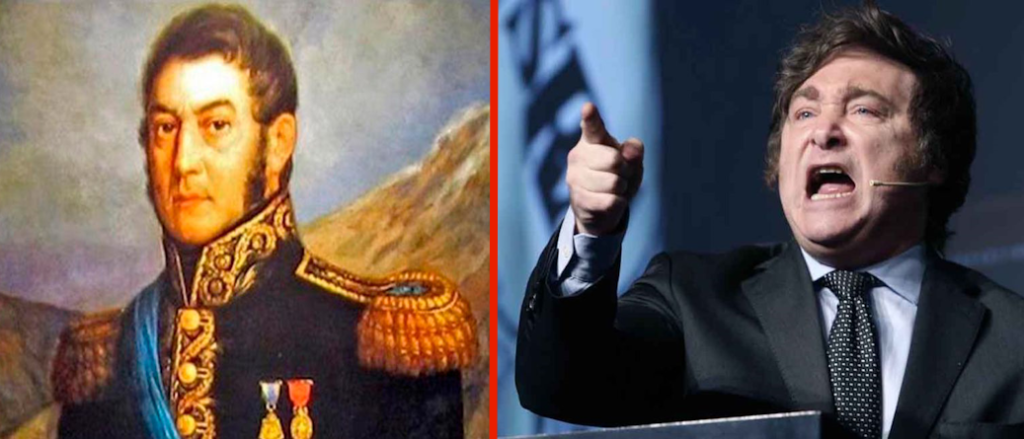
The man is clearly out of his mind, but his election says a lot about the state of things in Argentina. Milei the Mad won his election in a landslide. He’s immensely popular. Politics is downstream from culture, and any culture who wants Austrian economics, freedom, and the leadership of an eccentric genius is certainly worth a visit.
The United States has a fun and exciting president as well, but he’s only got 4 more years, assuming the Ruling Party doesn’t shoot him first. Javier Milei is a young gun in his late fifties, and in Argentina the President gets a whole decade to be in charge. That’s a decade of top notch economic reform from a popular leader who makes his country look like fun. This is a really good sign.
You can’t judge a country based on politics, because every republic is a Banana Republic, fruit exports notwithstanding. There’s no such thing as a good government. If you look at who a populace elects and why, you get a better picture. Argentina has seen the absolute worst economic decline possible- recently. They defaulted on their national debt twice in the last twenty years. It was so bad that other countries literally had to repossess Argentina’s ships. It’s fresh in the memories of the people how bad an economy can be, and if the nutbar with a raccoon on his head can save the day, they might just take it.
You can see this kind of recovery all across South America. El Salvador was so torn down by gang violence that nobody could leave their homes, that their president gave the finger to human rights coalitions and packed the prisons tighter than a sardine can. In Colombia, the problem was guerrilla fighters resisting the government with bombs and tanks. They’re still working on that, but it’s cleaned up to the point where Bogota and Medellin don’t even make the top fifty most dangerous countries in the world anymore. Baltimore and New Orleans took their spots. I’m almost curious if Venezuela will manage to depose Maduro and make a comeback. That would be something to see. What a time to be alive.
I digress. Another major culture point for Argentina is their pride. They have the best football team in the world, and they know it. When Argentina won the Copa America this year, the winning team sang a racist song about how the French team is all African. Pretty funny, frankly, but they got investigated by FIFA and it was a big scandal and all that… when the Argentine commissioner of Football demanded an apology for the team, they laughed in his face. Then Milei the Mad told him he was fired for violating the free speech rights of their darling stars.
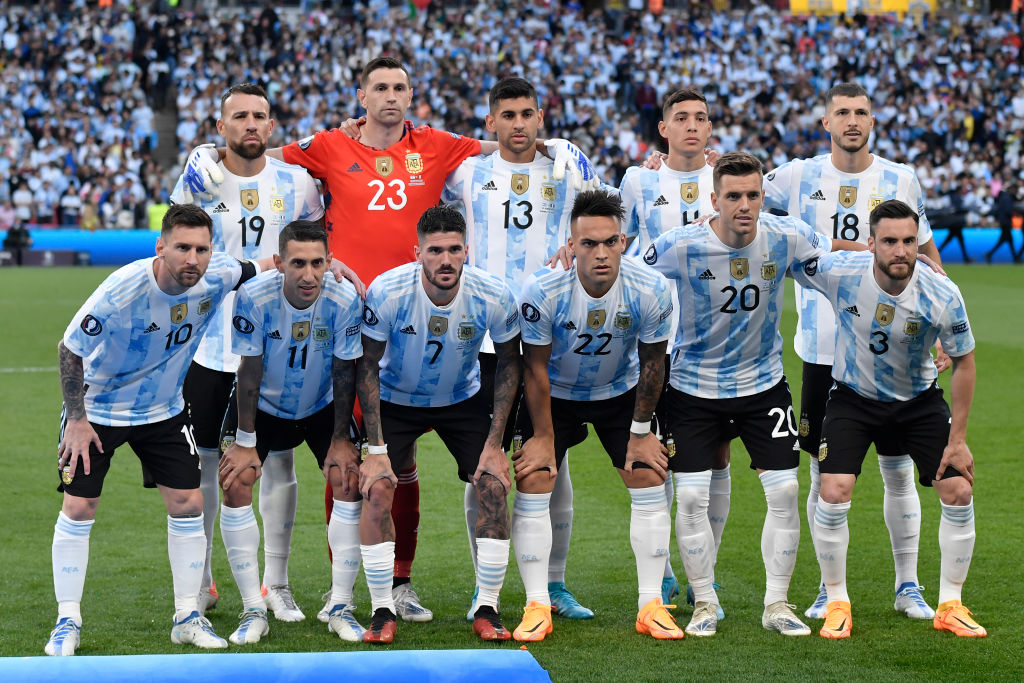
This is just a funny example, but that kind of pride is what makes a country deal with a collapsing economy and refuse to quit. This is something the United States has a very naked lack of. If you try to say that the United States is the greatest country in the world, some humorless schmuck will rush to correct you about slavery and Indian genocide, both of which are mostly lies, but it sends the message that national pride is not allowed here. Argentina has those same things in their history but they don’t dwell in the past. They believe themselves to be the best today, despite leading the world in exactly zero metrics, and I’m beginning to believe them.
Why Argentina
Argentina was the catalyst of this whole operation. As soon as I laid my virtual eyes on Buenos Aires, I couldn’t get it out of my mind. It haunted my thoughts like a beautiful woman, and everything I learned about its history, its culture, or its vistas deepened the obsession just a little further. It’s a living, breathing counterexample to the gringo’s understanding of South America. It’s NOT an unorganized dump of a country full of war and cartels. It IS a large plot of land with plenty of natural resources and a rich culture despite its obvious problems.
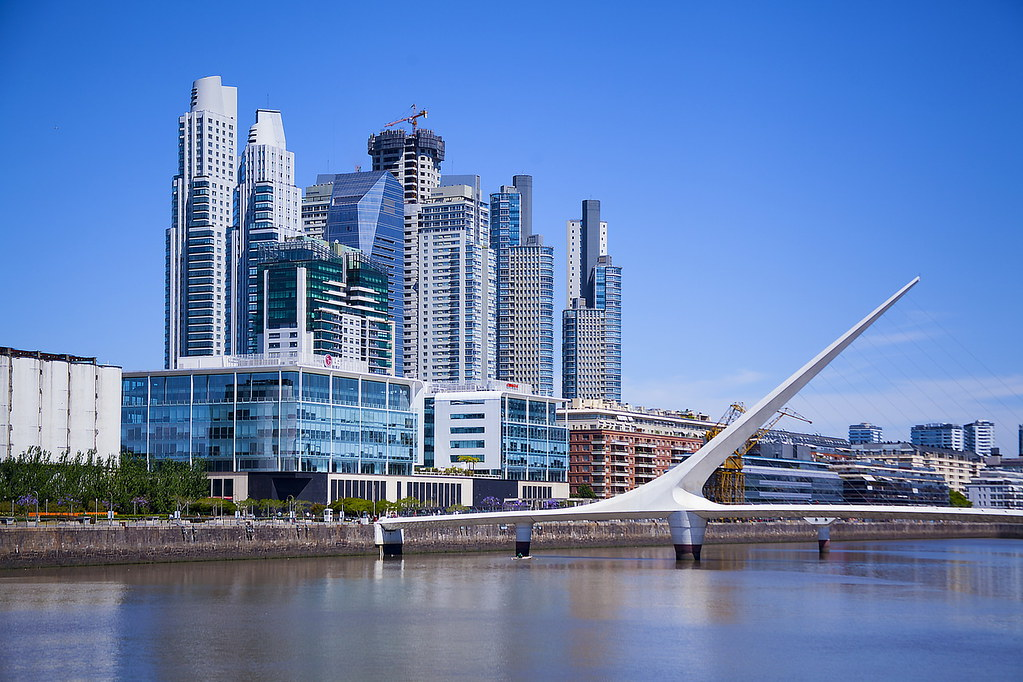
Argentina’s history tells us that a) economic collapse can happen to anybody, regardless of how wealthy a country is, and b) that it’s possible to maintain a culture even when things get as bad as possible. I suppose you could say that about any culture that ever rose and fell, even Spain, which once ruled half of the New World but today can barely handle 80% of the Iberian peninsula.
You have to want to preserve it, is the thing. I’m cheating a little bit because I’ve already been influenced by Colombia, but South America has a pattern of national pride that borders on insanity. I think that’s why they’re getting themselves in order this century, and why the United States is slipping into that hellish pit. Colombians and Argentines are so proud of their culture that they’ll do what it takes to preserve it, and even to make the countries they love so much a better place to live. The global community can shove it. We don’t have that attitude here. America is failing because Americans hate themselves.
The US has its own problems, among them is that nobody reads. This is bad news for a writer. I don’t hate myself enough that I chose this life. I was born with an unscratchable itch to put pen to paper. If I don’t write, I lose my marbles. Writing prevents me from hunting communists for sport and mounting their heads on my wall. When I do write, I get canceled by the very communists who’s heads would otherwise be on display in my living room. It’s like a cruel prank by God.
Argentina, meanwhile, was the world’s leading producer of Spanish language literature until all the writers were deemed too far-left to live and got chucked out of helicopters. Today, they maintain an impressive public library system and boast one of the coolest bookstores I’ve ever seen, El Ateneo Grand Splendid. The things a culture enshrines tells you a lot about it, and in Argentina, books are reverently encased in this golden temple.

I’m cheating again, but much to my surprise, Latinos read a lot. Even in Mexico, where everybody is tits-deep in a cell phone screen at all hours of the day. There was a bookstore on every block in some neighborhoods, even street vendors selling books- current events, philosophy, translated classics, economics, fiction, sci-fi and fantasy- books were as ubiquitous as churros and tacos. In Colombia, every cafe had at least a couple people posted up with a tinto and a good book. You might see that in the US, where cafes are four to a city. In Colombia, they’re four to a block. Frankly, I didn’t peg the Hispanics as an erudite bunch. I’m happily wrong about that one.
I’m not expecting to charge into Argentina and become a bestselling author, not with my caveman’s command of Spanish. If your skills are in demand elsewhere, shouldn’t you check it out? Explore it as an option, at the very least? That’s just common sense, and I’ve found it easier to learn a new language than to put my pencil down. Your communist friends can thank me later. ■


 Spud media