
If you find yourself getting offended when you write down the name of somebody you don’t like, birdwatching might be too tough of a sport for you. Maybe you shouldn’t even be outside. Luckily, the birdbrains at the American Ornithological Society have hatched a plan to protect your candy ass: they are changing the common names of dozens of birds to no longer be named after people.
In an effort to make birdwatching more inclusive to marginalized groups, the Society has formed the English Bird Names Project. Starting January 2024, the project aims to change the offensive common names of dozens of bird species.
“We’ve come to understand that there are certain names that have offensive or derogatory connotations that cause pain to people, and that it is important to change those, to remove those as barriers to their participation in the world of birds,” says Dr. Colleen Handel, the Society’s president.
What names could those possibly be? Hitler’s wren? The western bitchtit? The fudgepacking woodpecker? The niggling goose?
Turns out, the Society is mostly concerned with the white guys these birds are named after. The influential ornithologists of the 19th century didn’t abide by modern social standards, and therefore should be scrubbed from the history books.
“We need a much more inclusive and engaging scientific process that focuses attention on the unique features and beauty of the birds themselves… and birds need our help more than ever,” Dr. Handel said on the AOS website. So this isn’t some virtue signaling effort by people with nothing better to do- the birds themselves are upset to be named after racists. “Naming nature after people taints it a little bit,” adds Marshall Iliff, a self-loathing member of the project.
The American Ornithological Society hasn’t published a full list of those bird names which force marginalized birders to throw their field guides in anger, but that’s where Spud Underground comes in. We’ve found the most offensive English bird names for your reading pleasure. I say we keep these names alive, and prevent minorities from further ogling wildlife!

Oldsquaw (Clangula hyemalis)
The oldsquaw is a sea duck from the Arctic. The term squaw originally meant “young woman” in the Algonquin languages, which white settlers picked up to describe native American women generally. Four hundred years later, someone decided to call it a racial slur, and the duck was given the boring, generic name of “long-tailed duck.”
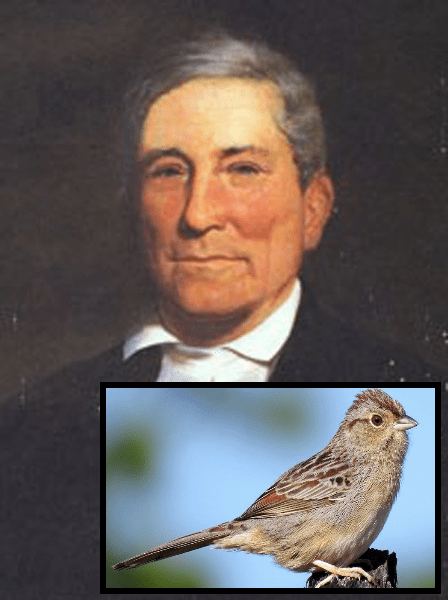
Bachman’s sparrow (Peucaea aestivalis)
Reverend John Bachman was a Lutheran minister and naturalist, who was a controversial figure even in his day. A few different animals bear his name; like Bachman’s Hare, the extinct Bachman’s Warbler, and Bachman’s Turner Overdrive. He was pretty vocal about his belief that black people are genetically inferior to whites, but thought that they could one day equal white man’s greatness through the power of Christ. He was one of the first ministers to have a mixed race congregation in the United States. Furthermore, he was one of the earliest naturalists to make the scientific claim that all races are actually the same species, which was not commonly accepted in the 1830s.
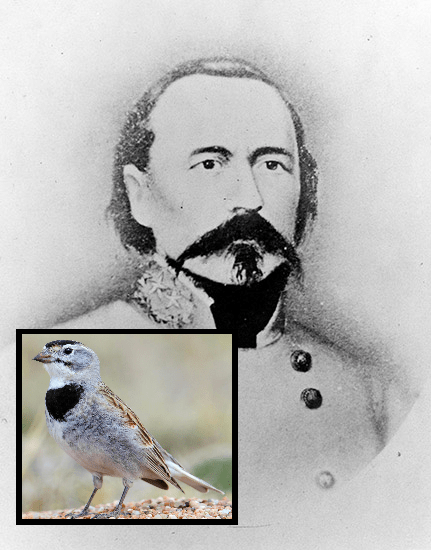
McCown’s longspur (Rhynchophanes mccownii)
John P. McCown was a U.S. Army officer who served extensively on the Frontier and during the brutal Seminole Wars. He liked collecting bird specimens and sending them to his ornithologist pals. When the Civil War broke out, McCown sided with the Confederacy.
John P. McCown never owned slaves and was actually kicked out of the Confederate army for losing a major battle. He later called the Confederacy a “a damned stinking cotton oligarchy… gotten up for the benefit of Isham G. Harris and Jefferson Davis and their damned corrupt cliques.”

Hodgson’s frogmouth (Batrachostomus hodgsoni)
Brian Houghton Hodgson is remembered today as a “colonial administrator.” A British citizen, he joined the East India Company as a writer to study the languages of the Indian subcontinent. He worked his way up the colonial ladder but always butted heads with his superiors back in London. He resisted British activity in Nepal, and when the British wanted to start teaching English exclusively in Indian schools, Hodgson fought that reform tooth and nail in order to preserve the unique languages of the region.
Hodgson retired to Darjeeling and started studying wildlife. He described several new species in the Himalayan region, usually giving them names derived from Sanskrit. Hodgson’s Frogmouth was named in his honor by George Robert Gray in 1859.
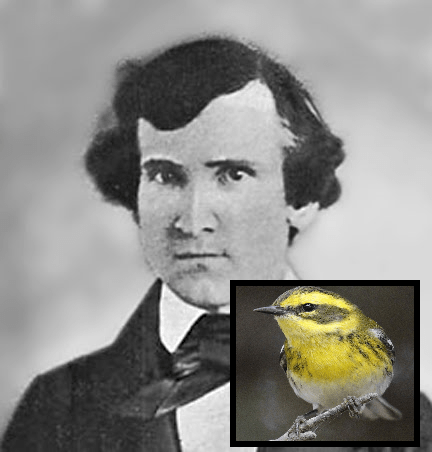
Townsend’s warbler (Setophaga townsendi)
John Kirk Townsend joined up with a westward expedition to become one of the first scientists to catalog wildlife of the Pacific Northwest. Townsend’s racist crime was collecting specimens during his travels, which sometimes included the bones of Native Americans, which sometimes were excavated from sacred burial sites. The narrative is that he stole these bones in an effort to prove his white supremacist theories. That’s either a lie or he never proved anything, because I can’t find any evidence to that claim. It’s worth noting that while Townsend was out studying birds, his Quaker family back in Philadelphia were making names for themselves as abolitionists.
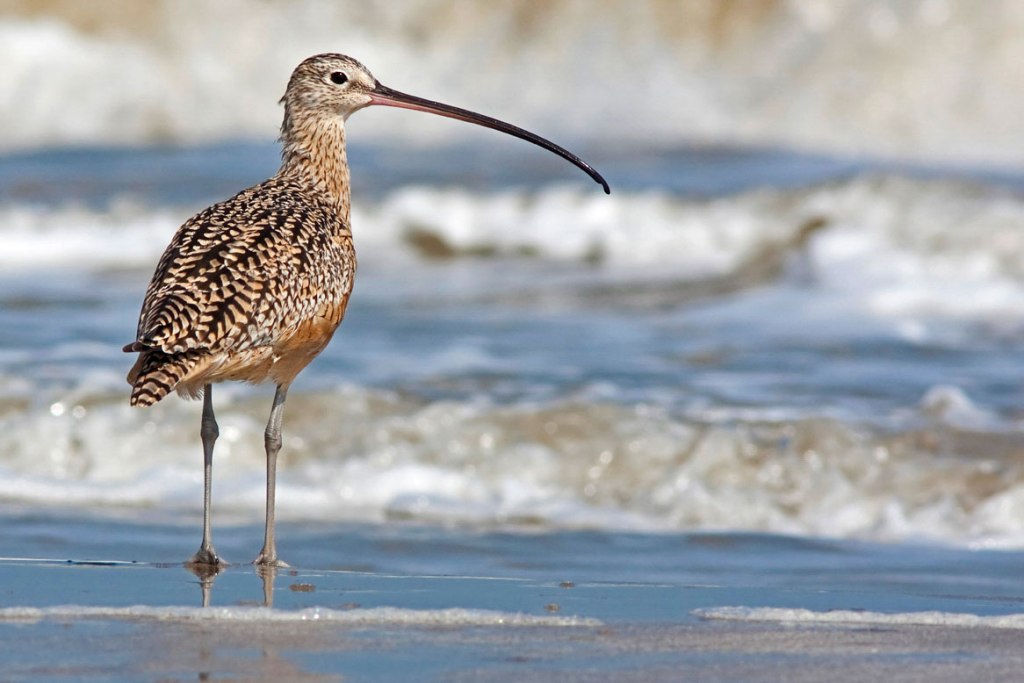
Eskimo curlew (Numenius borealis)
This probably-extinct bird gets its name from its tundra habitat, but eskimo has been deemed a no-no word for the Inuit and Yuit folks who once shared its territory. The origin of the term eskimo is uncertain. It probably has roots in Algonquin languages, as the Native Americans described their northern peers with names like “he who ties a snowshoe,” “people who speak a different language,” and “eaters of raw fish.” Those all sound pretty tame and accurate, so what’s the problem exactly? If eskimo meant “igloo-face” or “frozen dork” I’d be on board with this change.
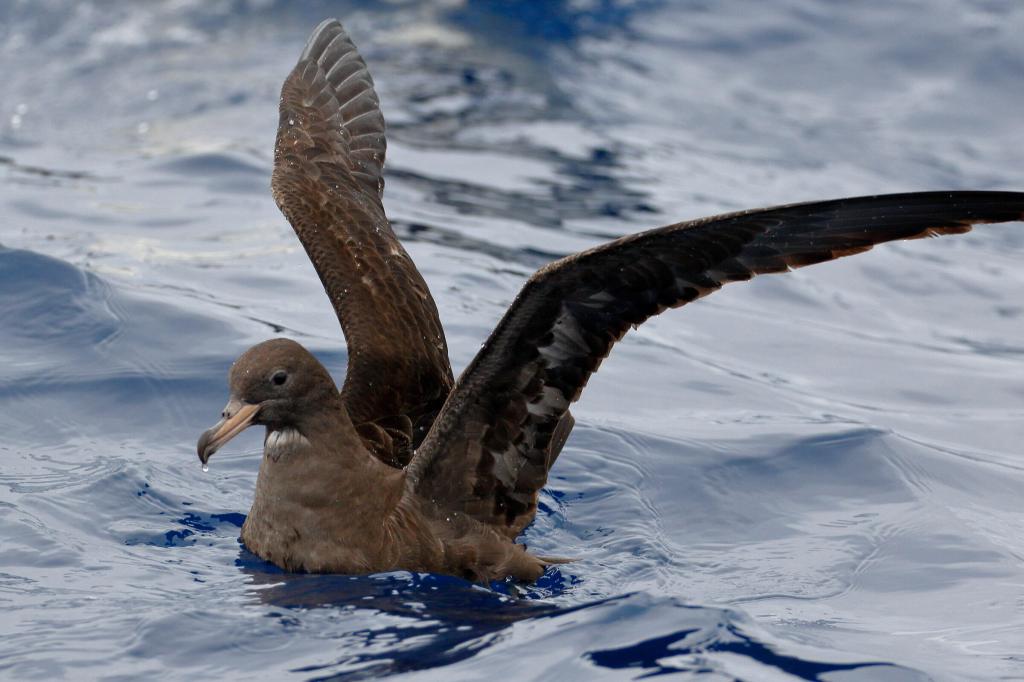
Flesh-footed shearwater (Ardenna carneipes)
The pinkish feet of this oceanic bird are where it gets its name. Even though it fits the milquetoast naming scheme that the AOS wants to embrace, this name won’t do either. Why? Because not all flesh is the same color, duh! To call this bird’s pink toes “flesh colored” is basically the same thing as saying people with darker skin don’t exist.

Maui parrotbill (Pseudonestor xanthophrys)
There doesn’t seem to be anything wrong with this name: the bird has a parrot-like bill and lives in the forests of Hawaii’s 2nd largest island. This name is unfortunately in English, and a lot of people think we should only use indigenous names for all animals. There wasn’t a name for this bird in Hawaii’s native language, so the Hawaiian Lexicon Committee made one up in 2010. The American Ornithological Society themselves rejected the name “kiwikiu” at the time because it was too hard to pronounce.

Wallace’s fruit dove (Ptilinopus wallacii)
Alfred Russell Wallace would have been a lot more famous if it weren’t for Charles Darwin. Both guys developed the theory of evolution via natural selection independently. Wallace got there first, but Charlie’s emphasis on competition made his theory more popular. Wallace would become a staunch defender of Darwin in the face of the day’s Christian zealots.
Wallace did a lot of field work in the Malay archipelago, where he described a whole slew of new species to science, discovered a zoological divide between the islands, and raised a baby orangutan. His other scientific hobbies included debating flat-earthers and resisting mandatory vaccinations (did I mention this was the 1880s?). Oh, but he used the N-word in his books, so I guess we should forget that he ever existed.
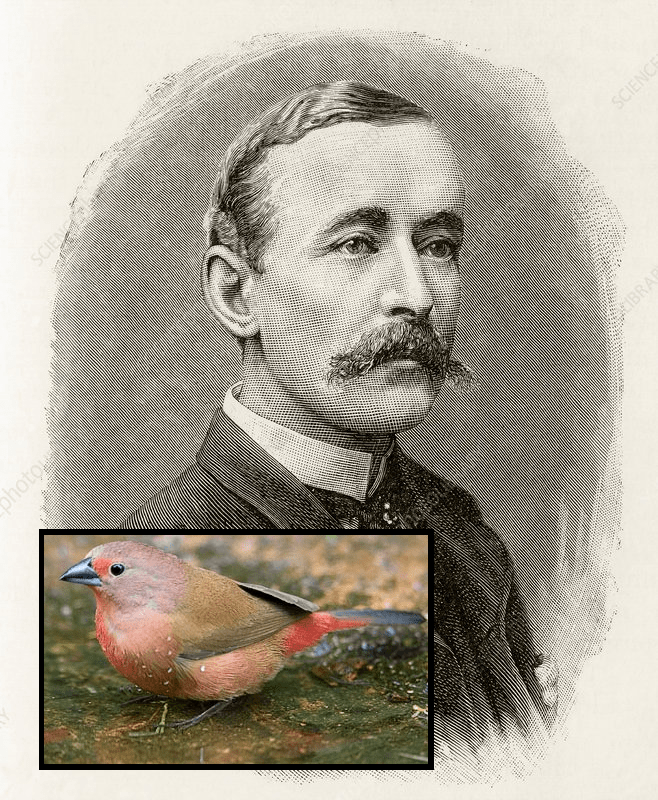
Jameson’s firefinch (Lagonosticta rhodopareia)
This bird is named after James Sligo Jameson, heir to the Jameson Whiskey fortune. He behaved as any rich kid does in the late 19th century: big-game hunting in Africa on Daddy’s dime. He was selected as a security officer to help rescue a German-Egyptian governor from war-torn Sudan. On this expedition, he witnessed the brutal mutilation and cannibalism of a 10-year-old girl by a local tribe.
In his personal writings, Jameson says that he didn’t expect the Congo tribe to actually go through with the cannibalism they were boasting, and described it as the worst thing he’d ever seen. But another member of the expedition, interpreter Assad Farran, made a public statement that Jameson bought the girl and wanted to see her murdered.
Farran retracted his statements and admitted he made the whole thing up. When Jameson passed away at the age of 31, Farran came out again and said he made up making the whole thing up, and that it did actually happen, for realsies. So we may never know what really happened, but you know exactly which story the white-guilt-bird-name-committee will choose to believe.
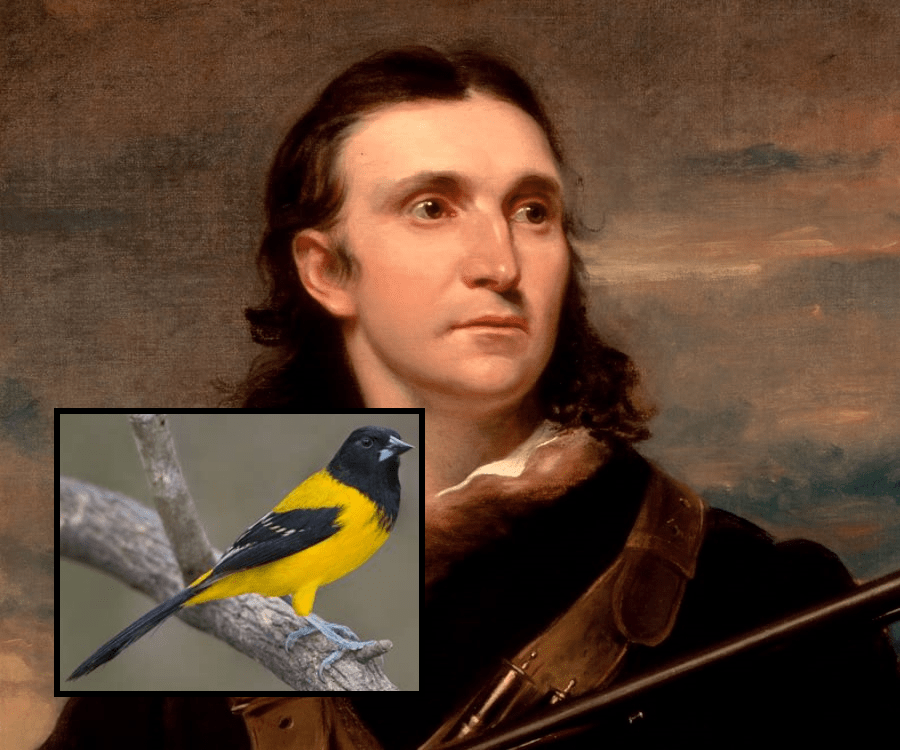
Audubon’s oriole (Icterus graduacauda)
This little yellow fella is named for John James Audubon, the French-American artist who became the most famous ornithologist in American history. He has many birds named after him, plus a few cities and natural landmarks, and the National Audubon Society which has over 500 chapters of bird lovers.
Audubon was an artist, first and foremost. He set out on a quest to paint every bird in America using watercolors and an original technique of propping up dead birds with wires. The resulting book, The Birds of America, was a tremendous success. The original copies remain some of the most expensive books ever produced.
He was also a con artist. He claimed to be a scientist, but his education and credentials were completely fabricated. He got busted stealing specimens from real scientists and claiming to have discovered them himself. Several of the 25 bird species he discovered have never been found again, he probably made those up too. He claimed to invent bird banding, although his own account of that is full of errors. Once he got famous, all of his journals magically got destroyed and he was forced to recall his life story to biographers from scratch.
Of course, slavery. One of Audubon’s many entrepreneurial ventures was a lumber mill in Kentucky, where he owned as many as nine slaves. That lasted for about ten years before the company went bankrupt and he served jail time for his unpaid debts. He was an advocate for slavery, but spent most of his career in New York where the practice was not legal.
The modern birder is quick to call him a white supremacist for that, but let’s not ignore that he was a big fan of Native Americans. He traveled with them frequently and described them “like brethren.” Despite telling biographers that his mother was of “Spanish extraction,” records clearly show that Audubon was born illegitimately to one of his father’s mistresses in Haiti. That’s right, there’s a good chance that the white-supremacist, slave-owning, bird-painting, con-man was 1/4 black.
Revisionist History
Shaniqua James sits in the front row of her ornithology class at Stanford. She fought long and hard to be in this chair and she can’t wait to dedicate her life to studying the birds she’s always loved. The professor enters the lecture hall and instructs the class to turn to page 48 of their textbooks. Shaniqua sees a detailed drawing of a little orange bird, but the name next to it… something’s not right. She has no idea who John Bachman is, but that doesn’t stop her hands from shaking. She spends the remainder of the class with a vacant stare while ‘Nam-style flashbacks of picking cotton race through her mind.
I don’t believe you. I don’t believe that people of color are desperate to get into ornithology, yet repelled by names of long-dead aristocrats. NOBODY knows who the fuck Alfred Wallace is. It should tell you something that it’s far easier to find stories of black ornithologists overcoming avian adversity, than it is to find the stories behind the harmful names.
There was a time when science wasn’t just for nerds. Naturalism in particular took a huge degree of adventure. Months at sea on some rickety ship, living for years in a shack among the natives, protected only by an interpreter and a couple of armed grunts. That doesn’t just take loads of money- that takes balls. Today, science is all about attending a university for x amount of years and learning how to do what you’re told. This is only appealing to nerds, and I think the nerds are jealous.
There’s nowhere else to discover new birds, no plains to cross, no Darkest Africa. The academics are envious that they don’t have the opportunity to explore and conquer. And even if they did, these geeks wouldn’t have the mettle to actually go through with it. So, they erase the adventure of scientists long dead. Then they lie. They tell you that they’re doing it to help the oppressed. They tell you that it’s all about what’s best for the birds. They use the shallow moral superiority of the Dunning-Kruger Age as a smokescreen to hide their jealous intentions.
It’s even more annoying that this feel-good anti-racist rhetoric is all for show. The American Ornithological Society has no sway over the scientific names, which will continue to bear disgraced eponyms. They can only change the common names of the birds, and every Wikipedia entry has a list of other common names already. Even if the title of the article is changed, the evil name will always be there as a “formerly known as” suffix. That’s already the case with the oldsquaw and McCown’s longspur.
If you really wanted to get John James Audubon out of the picture, you would lead with the slavery thing, then go on to explain how he was a lying, cheating son-of-a-bitch, right? Every one of these quacks is quick to condemn his slavery, but they never mention his habitual fraud. Maybe that’s because slavery is all they need to hear and they didn’t look into it any further. Maybe it’s because dishonesty isn’t a crime among liars.


 Spud media